
Help

We want to make it easy for you to do the right checks on a used car no matter what State or Territory you live in, or where the car you want to buy is located.

Have a look through our Used Car Buying Tips and Frequently Asked Questions below for helpful tips on what to do when buying a used car.

Used Car Buying Tips

When buying a used car, you should:

  • Inform the seller you intend to do an encumbrance check (PPSR check) and other checks on the car.
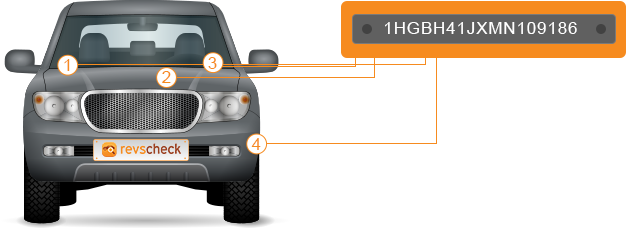
  • Obtain the Vehicle Identification Number (VIN) and enter it into the search box on this site to get the car’s complete history. The VIN can be found on the engine, vehicle registration papers, or on the inside of most car doors.
  • Make sure the VIN, engine number and registration details on the car match those on the registration papers.
  • Get an independent mechanical inspection.
  • On the day you take ownership of the vehicle, purchase a REVS/PPSR Certificate on this site to help protect you against repossession and other risks associated with buying a used car.

FAQs

  • Why is a comprehensive car history report from revscheck.com.au better than a basic PPSR search?

    A basic PPSR search usually only checks if a car is stolen or has money owing. A revscheck.com.au comprehensive car history report gives you a fuller picture by adding odometer history to help spot fraud, exact model variants to ensure you aren't overpaying for a base model, and market valuations - all important for knowing if the vehicle you are considering is a smart investment.

  • Can a Vin check detect odometer fraud?

    Yes. Choosing a comprehensive car history report from revscheck.com.au tracks historical mileage data, if it is available. This can help you to spot odometer clocking where a seller rolls back the numbers to make a high-mileage car look more attractive. A basic PPSR search does not provide odometer history. Without this information, you could face unexpected engine wear and expensive repairs.

  • How do I avoid paying too much for a used car?

    A basic PPSR check (formerly known as REVS check) doesn't provide pricing data. Our comprehensive revscheck.com.au car history reports include a market valuation guide that shows you the estimated value for both dealer and private sales. This data is essential in helping you determine and negotiate a fair price and can help you spot red flags, such as a price that is suspiciously low or isn't backed up by the car's actual specs.

  • Why do I need to verify the exact model variant?

    Many cars look identical on the outside but have vastly different values based on their engine type, transmission, or trim series. A basic PPSR search often provides only a broad approximation of the model. A comprehensive report from revscheck.com.au provides a precise VIN check that identifies the variant and series so you don't overpay for a car that isn't what it claims to be.

  • What do I do if the information on the report is not accurate?

    Please email us at [email protected] with proof of why the data in the report is not accurate. We will review and if the request is genuine, we will fully refund you.

  • What does encumbrance mean?

    An encumbrance relating to a vehicle being searched upon means that the vehicle has outstanding finance, i.e. money is owed on a loan relating to the vehicle. Make sure the finance is cleared and the encumbrance removed, prior to purchasing the vehicle.

  • The vehicle I searched on is reported as stolen, what should I do?

    Make sure you do not buy the vehicle until you have made some investigations of your own. We advise you to contact the Police in your State to obtain further detail.

  • What is a written-off vehicle?

    Those vehicles which have been in an accident, or suffered some form of impact, water, fire or malicious damage. Written-off vehicles are classified as either a statutory (unable to be re-registered) or repairable write-off (able to be re-registered in some States once repaired and passes written-off vehicle and safety certificate inspections).

    Written off vehicles can be of the following types:

    • Dismantled - A statutory write-off that is stripped of interior and exterior body parts, panels and components
    • Fire damage - Sections or all of the vehicle has been burnt by fire
    • Hail damage - Sections or all of the vehicle has been damaged by hail
    • Impact damage - Damage caused, due to violent contact with another object
    • Malicious damage - Wilful damage or destruction of a vehicle
    • Refer jurisdiction - Contact the registration authority displayed in the 'state of registration'
    • Unrecovered theft - A stolen vehicle that has not been recovered. Contact the relevant registration authority
    • Water damage - Immersed in fresh or salt water 
  • Can I get a REVS check on vehicles manufactured before 1989?

    Prior to 1989 VIN numbers varied between 11 and 17 characters. REVS can only report on vehicles with a 17 character VIN. Therefore information on vehicles manufactured before 1989 is limited.

  • What if the VIN isn't 17 characters long?

    if the VIN is not 17 characters long, please double check that you have the right VIN and that you have copied it down correctly. If the VIN is still less than 17 characters long, the VIN is most likely from a pre-1989 vehicle.

  • Why do I need to do a REVS check?

    If you purchase a vehicle from a private seller who has an outstanding loan attached to the vehicle (this is called an encumbrance), the vehicle could be repossessed and you could lose your money.

    You can check the PPSR - previously REVS (Register of Encumbered Vehicles) - on this website to determine if the vehicle is encumbered. In addition to doing a REVS check, we also recommend buying a history report that includes information about whether the car has been written-off, stolen, flood damaged or whether the odometer has been rolled back.

    Doing a REVS check is the simplest way to prevent repossession by a financier if someone else still owes money on the vehicle. If the vehicle is encumbered, you should not purchase it until you are satisfied with the arrangements made by the current owner to repay the debt.

    You need to be sure that the registration, engine and Vehicle Identification (VIN/Chassis) numbers on the registration papers are identical to those on the vehicle.

  • Where do I find the VIN?

    The vehicle registration number can be found on the the registration sticker, the vehicle itself, or on the door posts (where the door latches when it is closed). The vehicle's VIN is also displayed on the registration certificate and insurance policy documentation.

  • Why do I need the VIN?

    The Vehicle Identification Number, commonly abbreviated to VIN, is the unique serial number used by the Australian automotive industry to identify individual cars. Each car has a unique VIN that is 17 characters long, and it is the VIN that is used to search against various State and Territory government and industry databases to determine specific information such as if there is any money is owing, if the car has been written-off or stolen etc.